

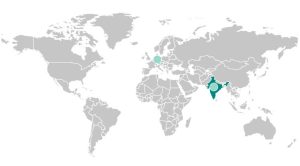



Germany’s healthcare sector offers exceptional opportunities for qualified nurses from India, the Philippines, Africa, and other non-EU countries. With over 300,000 vacant positions and salaries starting at €3,000 monthly, nurse jobs in Germany provide financial stability, professional growth, and a high quality of life. This comprehensive 1500+ word guide outlines a clear, step-by-step process to transition from your home country to a rewarding career in German hospitals, clinics, or elderly care facilities. Whether you’re a registered nurse in Manila, Mumbai, Nairobi, or Lagos, partnering with a trusted international recruitment company simplifies the journey and accelerates success.
Why Germany Needs International Nurses
The German healthcare system faces a structural shortage of nursing professionals. According to the Federal Employment Agency (Bundesagentur für Arbeit), over 300,000 nursing positions remain unfilled as of 2025. This crisis stems from an aging population—more than 21% of Germans are over 65—and a retiring workforce. The demand spans general wards, intensive care units, operating theaters, pediatric departments, and especially geriatric care facilities.
International nurses from India, the Philippines, and African nations are highly valued for their strong clinical training, English proficiency, and dedication. German employers actively recruit globally to maintain care standards. Successful candidates gain not only competitive compensation but also structured career progression, comprehensive social security, and long-term residency options. Family reunification is possible within months, and citizenship eligibility arises after five years of continuous residence.
Salary and Benefits Overview
Nurses in Germany operate under the TVöD (Tarifvertrag öffentlicher Dienst) collective agreement, ensuring transparent pay scales. Entry-level gross salaries range from €2,800 to €3,500 per month depending on the federal state and facility type. Shift differentials significantly boost earnings:
- Night shifts: +25%
- Weekend duties: +35%
- Public holidays: +50–100%
After social contributions and taxes (approximately 35–40%), net take-home pay ranges from €2,100 to €2,800 monthly. Within two years, specialization in ICU, anesthesia, or oncology can push gross earnings beyond €4,500. Management roles offer €5,000–€7,000. An experienced international recruitment company ensures you secure contracts at the highest pay grade for your qualifications.
Eligibility Requirements for Non-EU Nurses
Germany maintains rigorous but fair standards for foreign-trained healthcare workers. Meeting these criteria is the foundation of your application.
Educational and Professional Criteria
German authorities require equivalence with the national 3-year nursing curriculum (Gesundheits- und Krankenpfleger/in). Your qualifications must include:
- Bachelor’s degree in nursing (B.Sc. Nursing, BSN) or a 3-year diploma
- Minimum 4,600 hours of combined theoretical and clinical training
- Coverage of core modules: internal medicine, surgery, pediatrics, psychiatry, geriatrics
- Valid, unrestricted nursing license from your home country
- Certificate of good professional standing (issued within 3 months)
- At least 1–2 years of post-qualification clinical experience (preferred)
Nurses from India (INC-recognized programs), the Philippines (PRC-licensed BSN), and African countries (e.g., Nursing Council of Kenya, NMC Nigeria) generally meet educational thresholds. However, detailed syllabi and clinical rotation logs are mandatory for recognition.
German Language Proficiency
Patient safety demands fluent medical German. The minimum requirement is B2 level on the Common European Framework of Reference (CEFR). Specialized healthcare terminology (Pflegefachsprache) is assessed via:
- telc Deutsch B1·B2 Pflege
- Goethe-Zertifikat B2
- ÖSD Zertifikat B2
B1 is acceptable for initial recognition application, but B2 is mandatory before starting work. Many employers prefer C1 for complex roles. Begin language training 6–12 months before applying. International recruitment companies often provide subsidized or employer-sponsored courses in your home country.
Step-by-Step Application Process
The journey from application to first paycheck typically spans 12–24 months. Follow this proven roadmap to secure nurse jobs in Germany.
Step 1: Assess and Prepare Documents
Document preparation is the most time-intensive phase. Incomplete files cause 70% of recognition delays. Start by compiling:
- Valid passport (minimum 18 months validity)
- Nursing diploma and official transcripts
- Detailed training curriculum (module-by-module breakdown)
- Employer letters verifying clinical hours (e.g., “600 hours in ICU”)
- Current nursing license and registration certificate
- Certificate of good standing
- German language certificate (B1 minimum)
- Europass CV in tabular format
- Recent passport photos (biometric)
- Marriage certificate (if name change applies)
All non-German documents require sworn translation and apostille/legalization. Budget €400–€900 and 1–3 months. An international recruitment company offers free document audits to prevent rejections.
Step 2: Achieve German Language Proficiency
Structured language learning is non-negotiable. A realistic study plan:
- Months 1–3: A1–A2 (basic communication, 200 hours)
- Months 4–8: B1 with medical vocabulary (400 hours)
- Months 9–12: B2 Pflege exam preparation (200–300 hours)
Philippine nurses in Manila can attend Goethe-Institut or agency-partnered schools. Indian candidates in Delhi, Bangalore, or Kochi access intensive programs. African nurses in Nairobi, Lagos, or Accra benefit from local Goethe centers. Online platforms like Preply or agency portals supplement in-person training. Aim for 20–25 study hours weekly.
Step 3: Apply for Qualification Recognition (Anerkennung)
The Anerkennung process evaluates your training against German standards. Choose your target federal state strategically:
- North Rhine-Westphalia: Highest volume of nurse jobs in Germany
- Bavaria: Digital submission, fast processing
- Berlin: Urban hospitals, diverse expat community
- Baden-Württemberg: Strong elderly care demand
Submit via anerkennung-in-deutschland.de or state portal. Fees: €200–€600. Processing: 3–6 months. Outcomes:
- Full equivalence: Immediate practice rights
- Partial recognition: Defizitbescheid lists gaps
Over 85% of non-EU nurses receive partial recognition, requiring compensation measures.
Step 4: Complete Compensation Measures
Bridge identified gaps through paid work or exam:
- Adaptation Period (Anpassungslehrgang): 3–36 months supervised employment as nursing assistant (€2,200–€2,800 gross). Most common and practical route.
- Aptitude Test (Kenntnisprüfung): One-day exam (written, oral, OSCE). Prep courses: €1,000–€2,500, 3–6 months.
Agencies secure adaptation placements with guaranteed salary and housing.
Step 5: Secure a Job Offer
A binding contract is required for visa issuance. Access nurse jobs in Germany via:
- International recruitment companies: Direct hospital partnerships, pre-screened roles
- Job portals: StepStone, Indeed, EURES
- Direct applications: Helios, Asklepios, Charité, Unikliniken
Craft a 1–2 page European CV emphasizing clinical hours, specialties, and language level. Agencies provide mock interviews and salary negotiation.
Step 6: Apply for Skilled Worker Visa (§18a AufenthG)
Submit at German embassy/consulate with:
- Employment contract (minimum €45,000/year for priority processing)
- Recognition certificate
- B2 language certificate
- Health insurance (valid from day one)
- Blocked account (€11,208) or salary proof
Processing: 6–12 weeks. Fee: €75–€100. Receive national D visa for entry.
Step 7: Relocate and Start Working
Upon arrival:
- Register at Einwohnermeldeamt within 14 days
- Apply for electronic residence permit (eAT)
- Open bank account (N26, Commerzbank)
- Begin orientation and adaptation training
Employers provide staff apartments (€400–€800), airport pickup, and integration support.
Country-Specific Considerations
Nurses from India
Indian B.Sc. Nursing (INC-approved) is highly compatible. Focus on:
- Clinical rotation logs from medical college hospitals
- Goethe-Institut courses in major cities
- Recognition in NRW or Bavaria for fastest placement
Timeline: 12–18 months. Many secure ICU or surgical roles.
Nurses from the Philippines
BSN + PRC license is gold standard. Leverage:
- Strong English base for German acquisition
- Agency-partnered B2 programs in Manila
- Elderly care demand in rural Germany
Adaptation often completes in 6–12 months due to clinical rigor.
Nurses from Africa
Nigerian, Kenyan, Ghanaian diplomas require apostille. Prioritize:
- Ministry of Education verification
- B2 training in capital cities
- States with African diaspora support
Community networks in Germany ease transition.
Timeline and Costs Breakdown
| Phase | Duration | Estimated Cost |
|---|---|---|
| Language training (A1–B2) | 6–12 months | €500–€2,000 |
| Document preparation & translation | 1–3 months | €400–€900 |
| Recognition application | 3–6 months | €200–€600 |
| Job search & visa | 2–4 months | €100–€300 |
| Relocation (flights, initial setup) | 1 month | €500–€1,000 |
| Total | 12–24 months | €1,700–€4,800 |
Costs are offset by paid adaptation work. Many international recruitment companies cover language or visa fees.
Common Challenges and Solutions
- Document delays: Use agency checklists; submit digitally
- Cultural adjustment: Join expat nursing groups on Facebook
- Winter climate: Invest in quality thermal wear
- Formal workplace culture: Practice “Sie” form and hierarchy
Success Stories from Non-EU Nurses
Maria, Manila: B2 in 9 months → NRW recognition → €3,200 ICU nurse.
Rahul, Mumbai: 6-month adaptation → family reunification → €3,800 surgical ward.
Aisha, Nairobi: Passed Kenntnisprüfung → Berlin geriatric center → €3,100.
Conclusion
Applying for nurse jobs in Germany from India, the Philippines, Africa, or any non-EU country is a structured, achievable process yielding lifelong rewards. Begin with language training, secure recognition, and partner with a reputable international recruitment company to navigate visas, placement, and relocation. Within 1–2 years, you can build a thriving career in one of Europe’s most respected healthcare systems. Your German nursing journey starts today—take the first step.
About GloberiaGlobal.de
GloberiaGlobal.de, powered by Globeria Consulting GmbH, is a premier international recruitment company guiding nurses from India, Philippines, Africa, and beyond to secure recognition, language certification, visas, and permanent nurse jobs in Germany with full support.
- Website: www.globeriaglobal.de
- Email: [email protected]